Groundwork: The First Dance
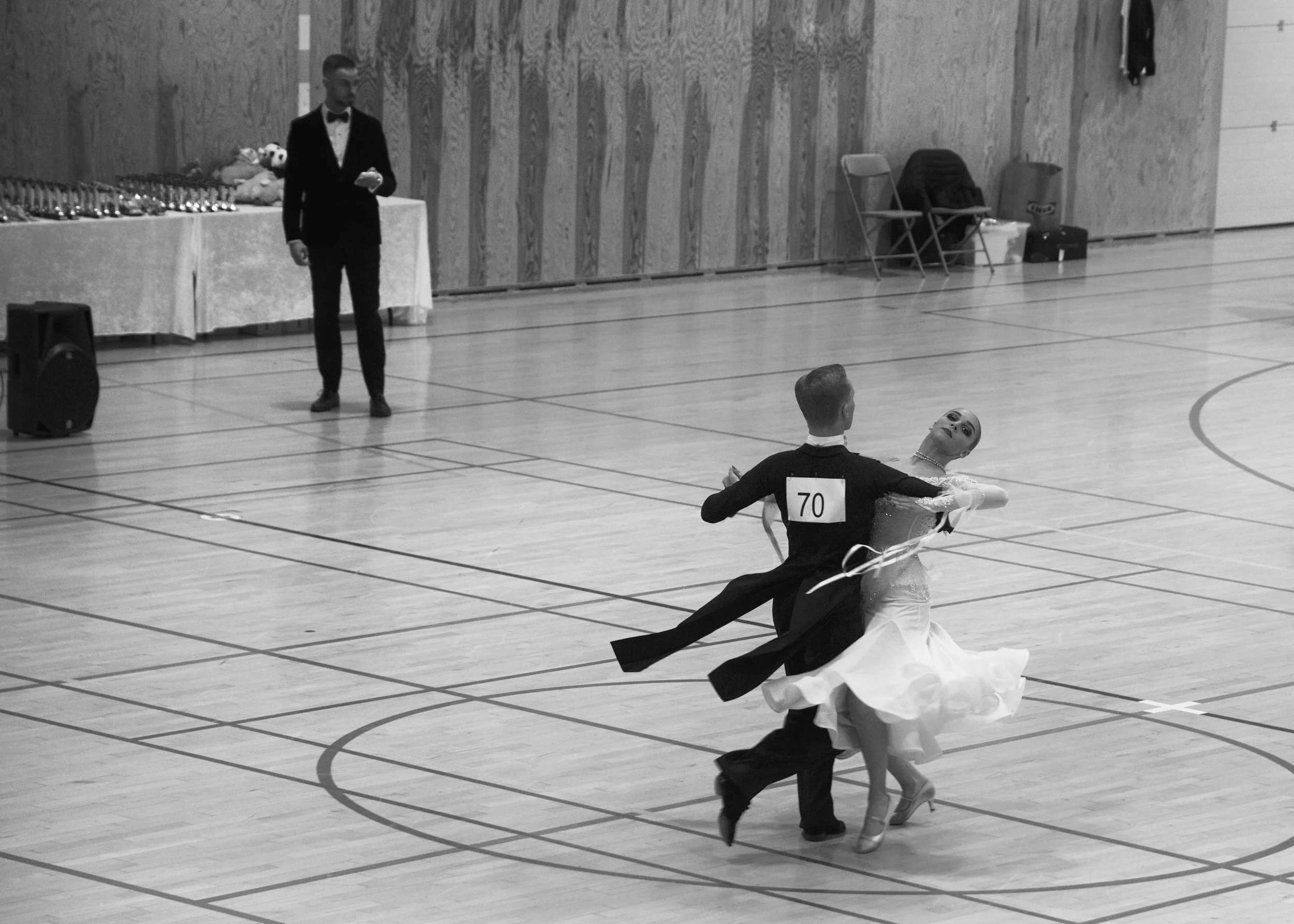
Like dancers preparing for their first step, groundwork is where horse and human learn the rhythm of partnership.
Groundwork: The First Dance
By Désirée Braganza and Elizabeth King
The Opening Steps
Dressage rider Elizabeth King and I were talking about groundwork.
Not techniques. Not systems. Not whether one should lunge, long line, yield the hindquarters or disengage anything.
We were talking about synchrony.
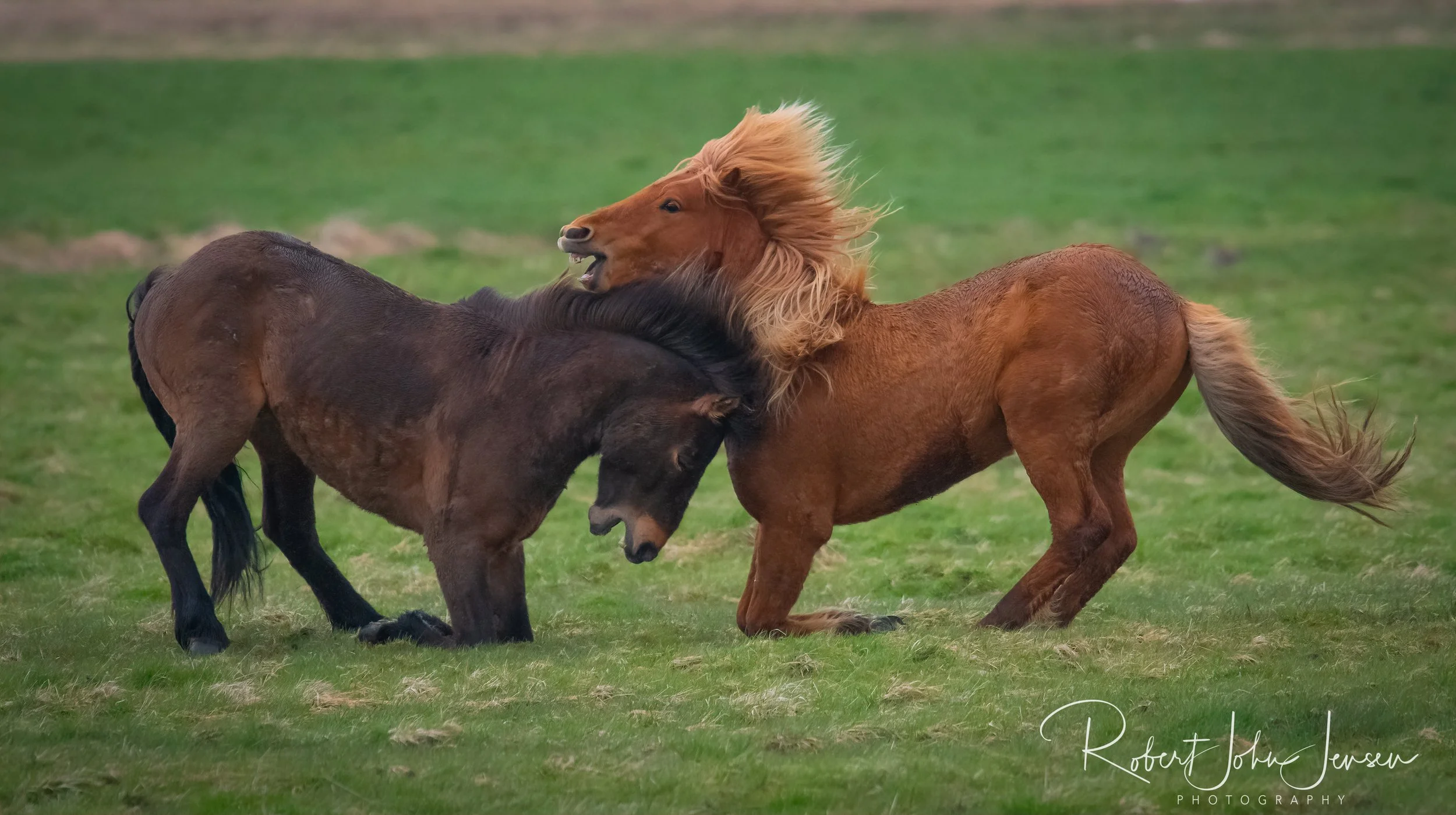
Photo credit: Bob Jensen. Two Icelandic horses falling into rhythm through play.
Finding the Rhythm in the Living Feedback Loop
From an ethological standpoint, horses are exquisitely attuned to one another’s movement. In a herd, no one sends a memo. A shift in weight, a slight lift of the head, a change in breath: the others feel it. Movement ripples. Attention ripples. The herd becomes a living feedback loop.
They are dialed in.
Synchrony is not decorative. It is survival. It is social glue. It is how equines pay attention to each together.
When Domestic Life Choreographs the Dance
Domestic life complicates this. We assemble groups based on stall availability and fencing logistics. A tall warmblood may live beside a compact pony. Different stride lengths. Different arcs of motion. Different physics. Plugging into one another takes practice.
Lots of practice.
Riding is not so different.
When a rider stays in synchrony with a horse, we say: she is a natural.
When a rider influences the movement with tact and timing, we say: what a beautiful partnership.
When synchrony breaks down and one over-directs or the other braces, we see it immediately. The flow goes flat. The bodies look separate. They are no longer in a shared feedback loop. They are on parallel tracks.
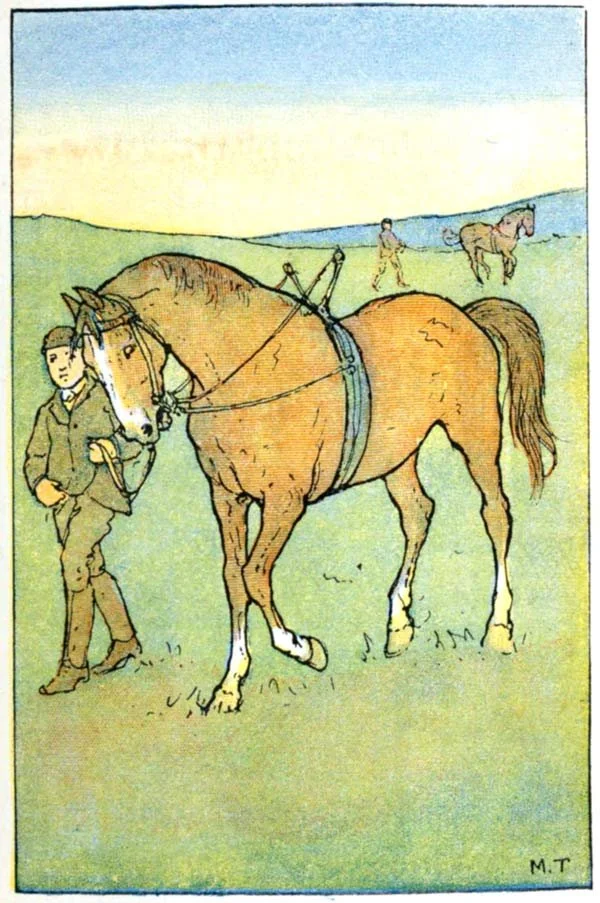
Photo credit: Illustration from, A Horse Book by Mary Tourtell, 1901 (“Schooling” chapter). A clear example of horses led in surcingles and fixed reins with imposed gaits. Horse and Human clearly out of step. In everyday handling, the mismatch is usually more subtle, but it’s there if you look for it.
Ballroom Lessons: Two-Way Half Halts
Think ballroom dancing. Hundreds of micro-signals pass between partners so the dance looks seamless. It is not control. It is conversation. In riding we might think of half-halts: traditionally described as rider-influenced moments of rebalancing. But horses rebalance too. They shorten, shift weight, reorganize their stride before a turn, a transition or a change in attention. The most fluent half-halts are not imposed interruptions. They are shared moments of reorganization, sometimes initiated by the rider, sometimes offered by the horse, ideally recognized and met by the other.
On the ground, the same principles apply.
There are many systems of groundwork. Some lean toward exercise. Some lean toward obedience. Some toward precision. Some toward control.
But what if groundwork is first about relationship and rhythm?
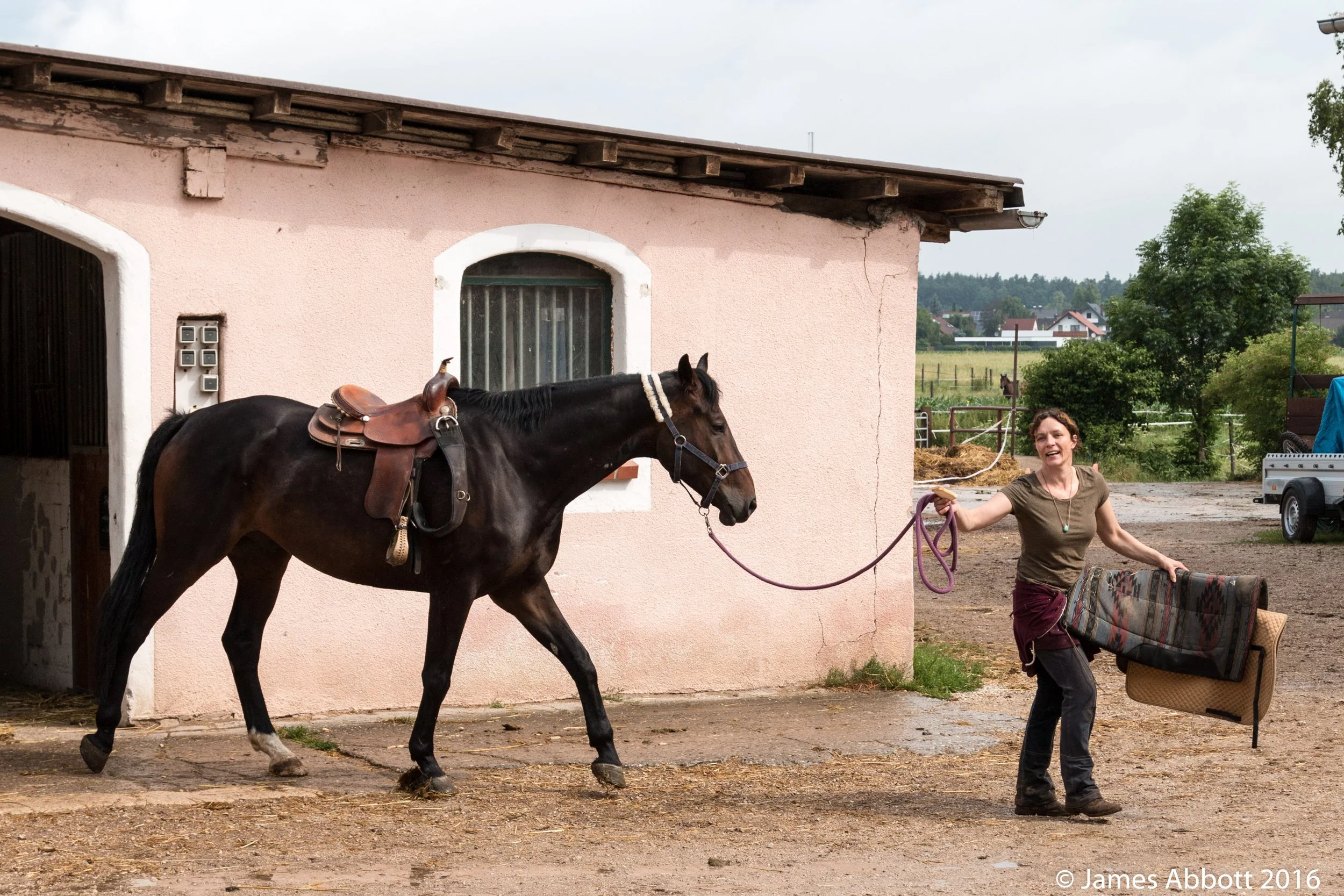
Photo Credit: James Abbott. Not shoulder to shoulder, but giving this saddled horse room to find her own stride.
Walking the Area First
Elizabeth said: “I’m an English rider and people are surprised by how much groundwork I do. I once had a client bring a new horse for training and when I began by simply walking them around the arena, he said, I’ve never seen anyone do that before.”
She walks with the horse to feel how they move. Where there is stiffness. Where there is protection. Which direction feels easier. How they organize their body in space.
And equally important: how they organize together.
“My gait. How I move. I want to know how we go together on the ground because it translates directly to how we’ll go under saddle.”
Before we ever sit on a horse’s back, we have already declared ourselves through our movement.
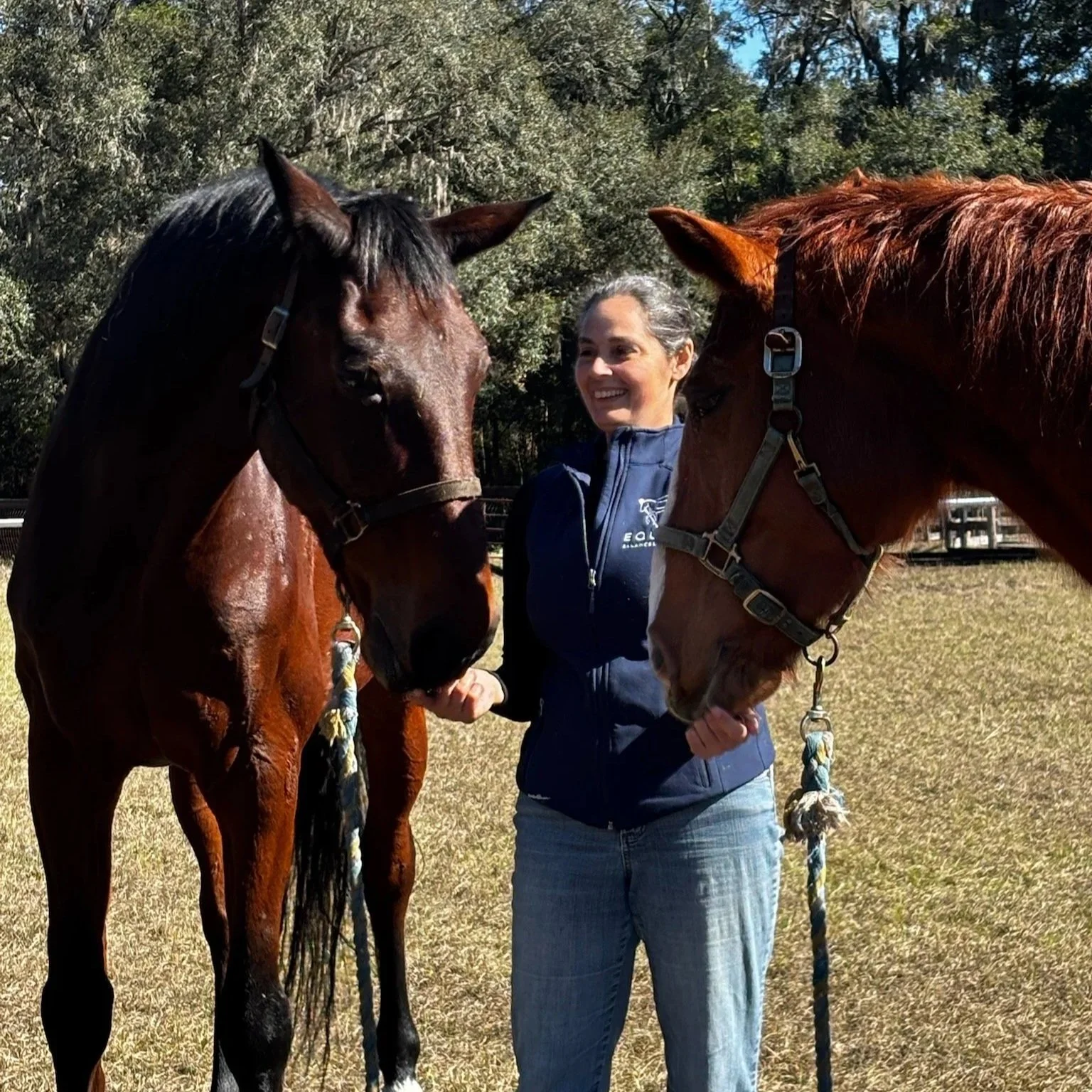
Spending time together: Elizabeth observing how two horses organize their movement on the ground.
Learning the Partner
Elizabeth adds: “When I walk from paddock to barn with a horse, I pay attention to footsteps. Mine and theirs. I notice whether I am hurrying them. Whether they are pulling me. Whether our strides clash or braid.
There is often a moment when something clicks. The steps align. Not identical. Aligned. The rhythm becomes shared rather than negotiated.
Marching side by side can be deeply connective. Two bodies moving through space with a common beat.
Knowing exactly which hoof is falling and when: front, hind, left, right is invaluable for riding.”
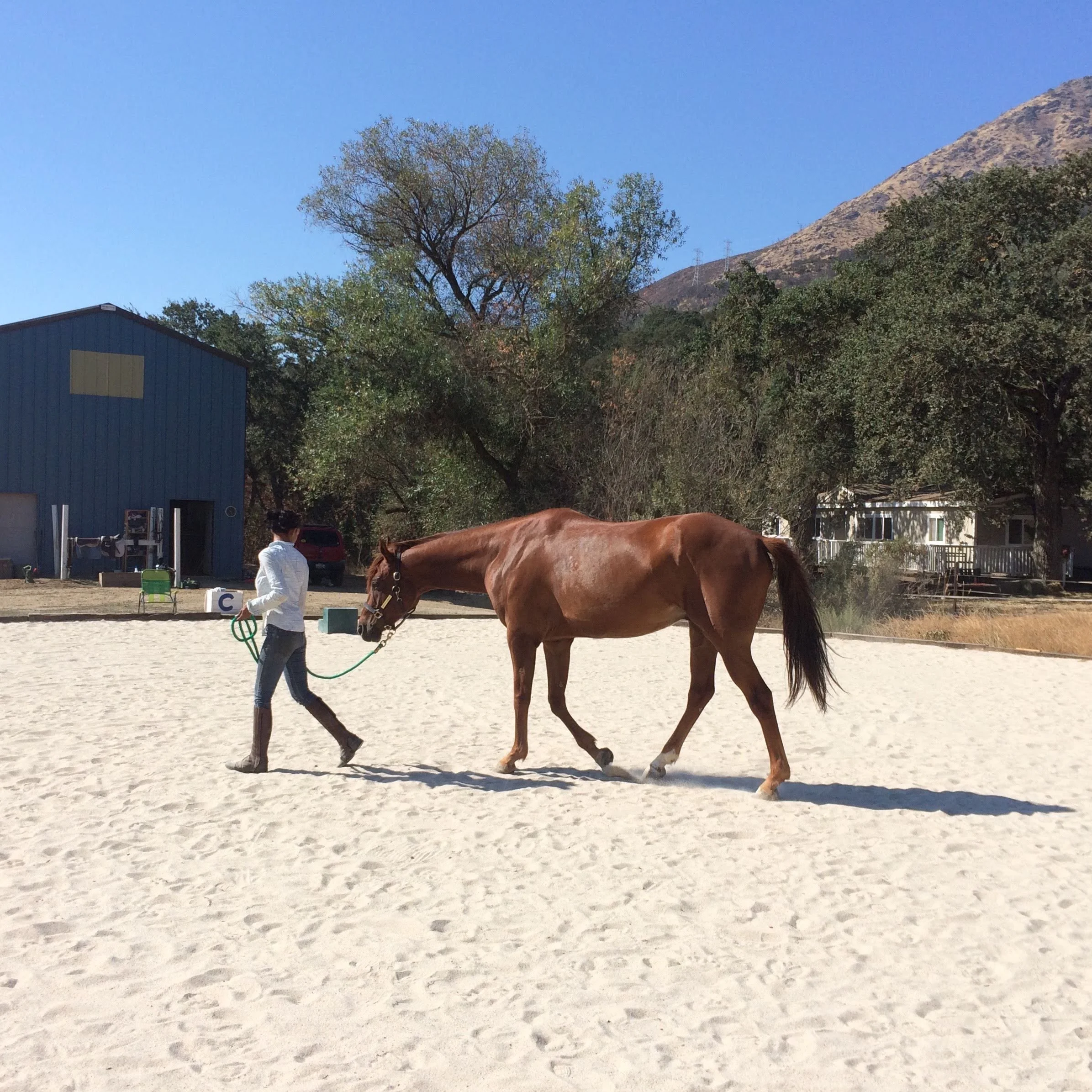
Désirée finding the rhythm with her 17+ hand four-year-old dance partner.
Rhythm is not abstract. It is biomechanical. It is measurable in footfalls. Without rhythm there is no relaxation. It is the foundation and the first step in the German Training Scale. Without relaxation there is no impulsion. Without impulsion there is no collection. The entire dressage scale rests on this first conversation.
On the ground, synchrony sometimes asks us to rethink personal space.
Leading does not always mean shoulder to shoulder. Sometimes you are slightly ahead. Sometimes slightly behind. Sometimes farther away on a longer line so that the arc of their neck can swing freely.
The question is not: am I in the correct position according to a textbook?
The question is: are we moving freely together?
Taller horses organize their mass differently than shorter ones. A big mover covers ground in a way that can make a human feel like they are trotting just to keep up. The physics and geometry matter.
The aim of groundwork is not to dominate the math.
It is to notice it.
Every horse has a signature way of moving, as do you. Groundwork, at its most ethological, is the study of that signature. Where do I harmonize with them? Where do I interrupt them? Where do I block them without realizing.
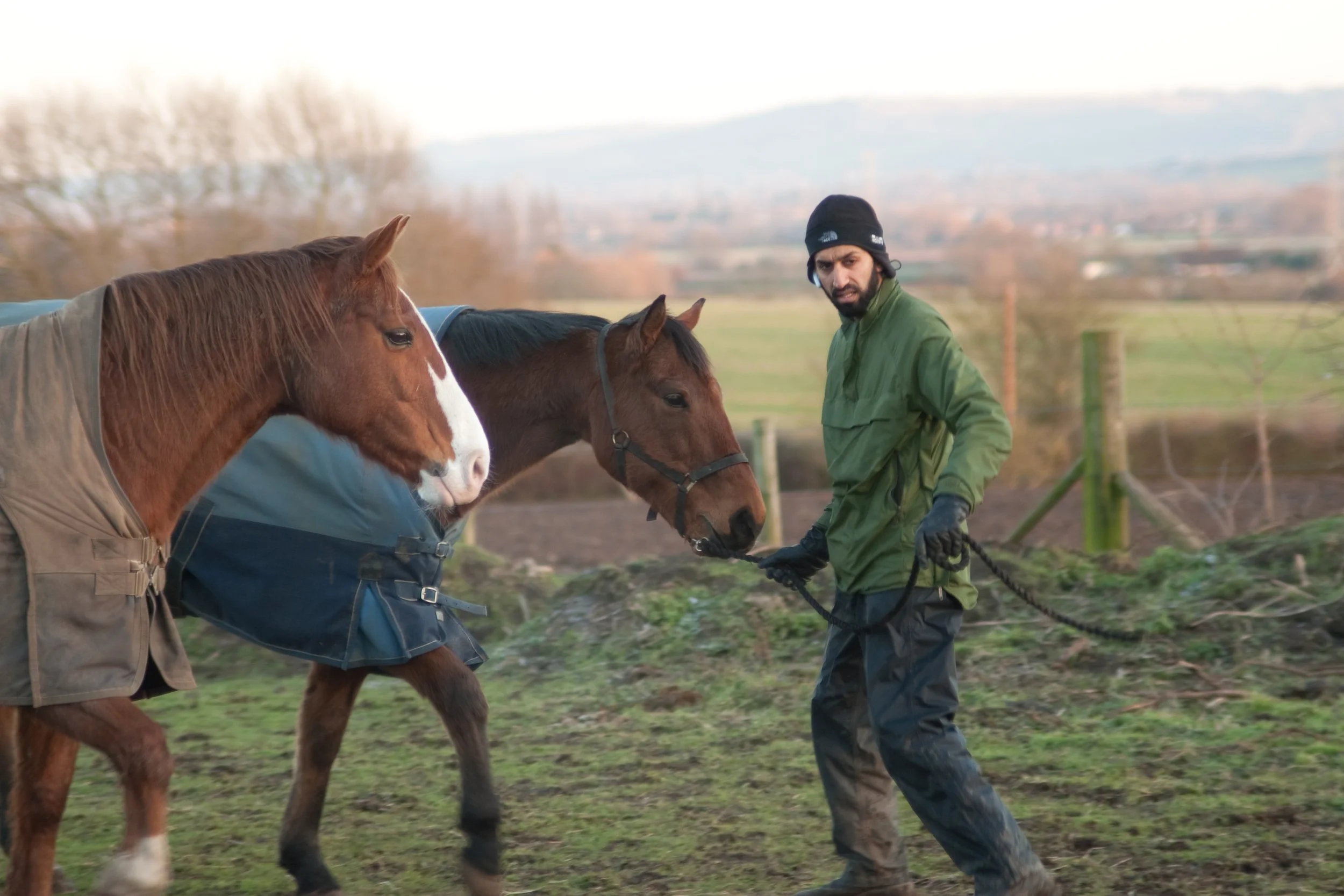
Groundwork spreads. One horse on the lead rope, the other joining the rhythm.
Simple Steps
Notice hoof falls from place to place.
Notice your own footfalls.
Experiment with tempo. Lengthen your stride. Shorten it. Soften your knees. Slow your breathing.
Feel for the times where you and your horse are in synch. What differences do you notice? Play with those.
Influence if needed. Yield if needed.
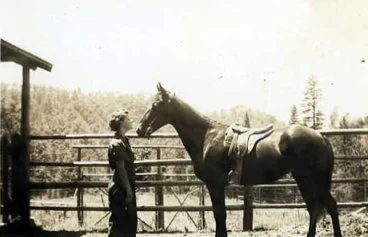
When horse and human mirror each other, the conversation is happening
But First, Listen.
Groundwork is not preparation for riding. It is the first dance.
Friendly Reminder: These articles are meant to spark thought, not replace expert guidance. Consult equine professionals for individual advice.
About the Authors
Désirée Braganza, EdD, EBQ, received her equine behaviorist qualifications from the Natural Animal Centre, located in South Africa. As a member of Bodhi Horse Practice, she collaborates with equine professionals worldwide on research projects specific to experiences of domesticated horses from an ethological lens. She is a horse partner, a rider, and has cared for and supported numerous horses over the years. Désirée recently relocated from Northern California and is now based in Monroe, Georgia, USA. She consults internationally in person and virtually.
Elizabeth King is a USDF Bronze and Silver Medalist with a lifetime in the equestrian world. Her background includes professional dressage training, barn management and comprehensive horse care, experiences that shaped her understanding of the wide variation in horses’ physical, mental and nutritional needs. Elizabeth is the founder of Equine Balanced Support, a research informed equine nutrition company offering individualized support for horses in all walks of life, from performance athletes to companions. Her work emphasizes thoughtful, horse centered nutrition tailored to the individual rather than standardized programs. She is based in New York and Florida, USA and consults worldwide.
We believe in making ideas freely available, without paywalls. If this article resonates with you and you would like to offer your support so other horses may benefit, feel free to participate in a way that feels true to you.