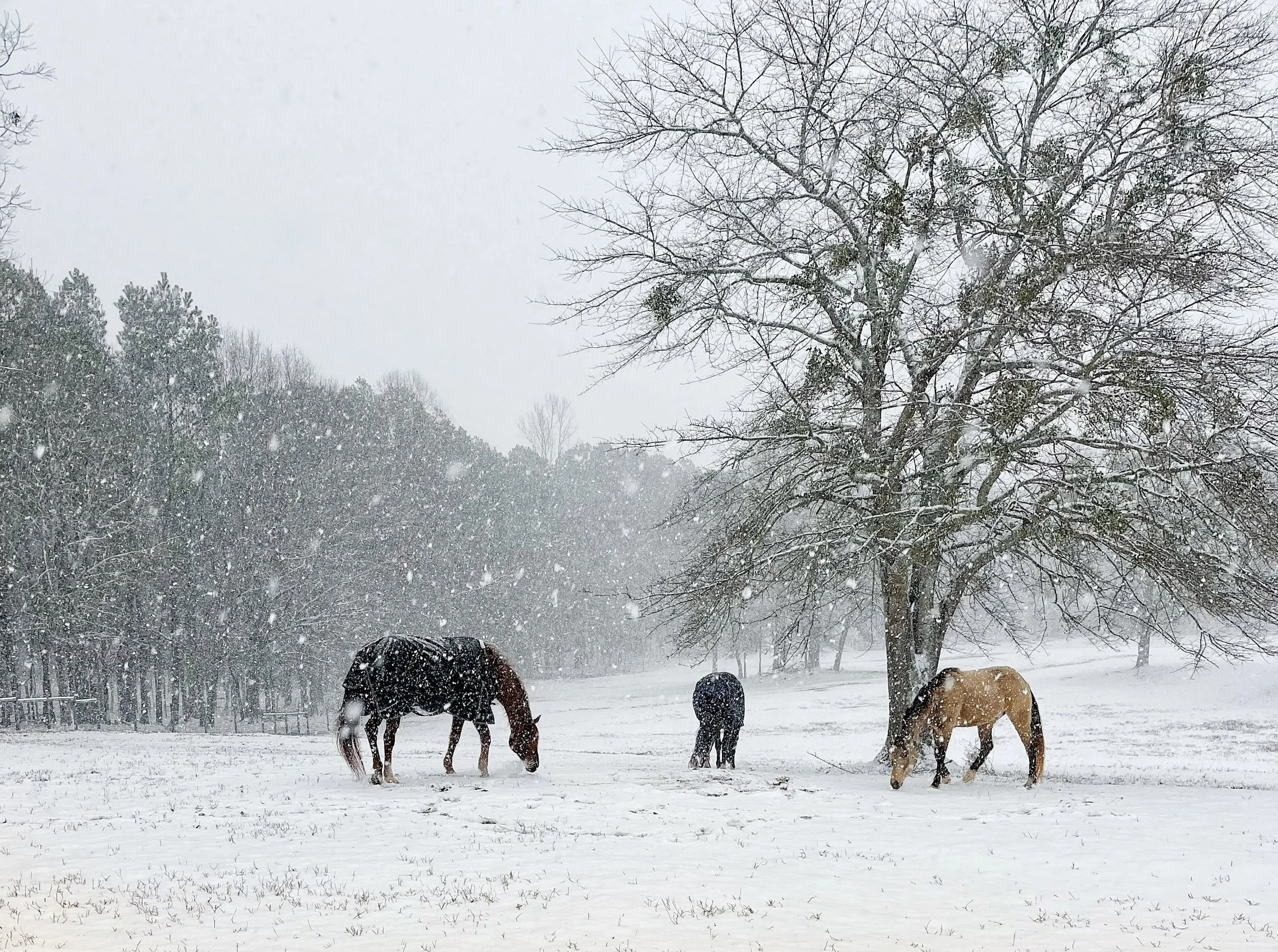
Three horses exploring a rare winter snowfall in Northeast, Georgia, USA.
Blanketing: Straps, Snaps and Snafus
By Désirée Braganza with Elizabeth King
The recent waves of unusual cold and winter storms across the southern United States have forced a fast learning curve that northern horse people have been quietly fluent in for decades. For this article, I invited Elizabeth King into the conversation. Elizabeth is a dressage trainer based in New York State who has managed competitive barns and winters horses in Florida. She is also an equine nutrition expert who founded Equine Balanced Support. Elizabeth lives at the intersection of weather extremes and practical decision making and has the wardrobe to prove it.
Before we talk about blankets, we need to talk about coats.
A Note on Horse Coats
Horses grow coats in response to climate, geography and lived conditions. A healthy horse regulates temperature through layered metabolic processes that include hair density, oil production, vascular changes and seasonal shedding cycles. These systems are adaptive and responsive, not one size fits all.
Coats are not uniform across horses or regions. A horse living in Dubai will not grow the same coat as a horse living in coastal Norfolk. Even two horses living side by side can grow very different coats depending on age, health, nutrition and genetics.
The outer oils that allow rain to bead and roll are part of a dynamic system. There is even a naturally occurring self grooming enzyme that helps coats keep doing their job under varied conditions. When these systems are intact and supported, they work remarkably well. They also have limits, which brings us to domestication.
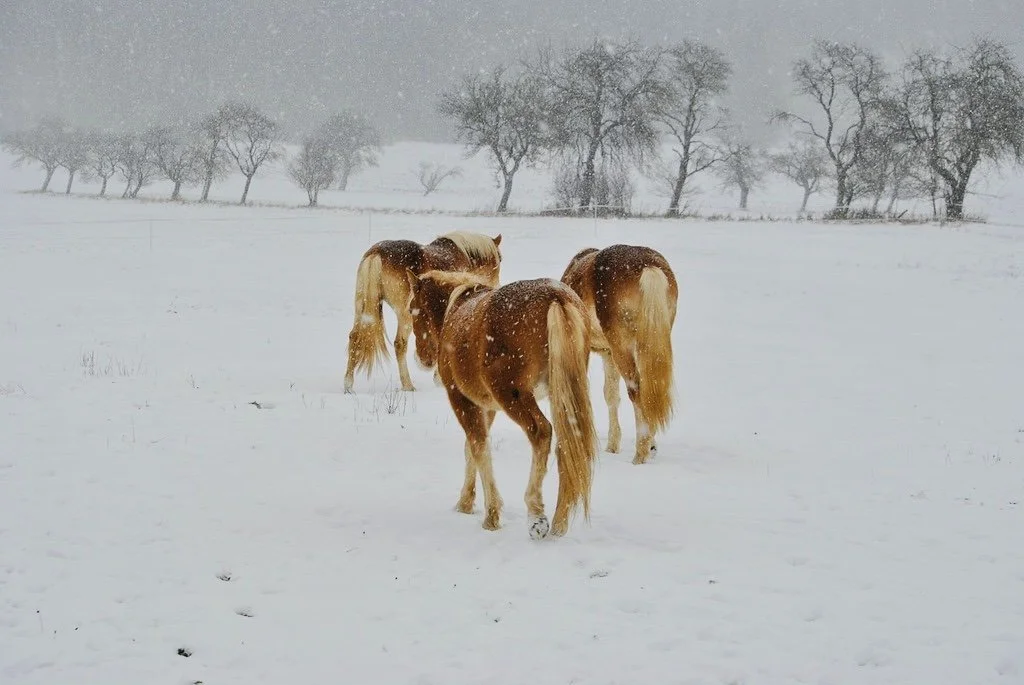
Three semi wild Haflingers with winter coats shaped by climate and Alpine regions.
Domestication Changes the Equation
Once horses step fully into our human systems, many of their natural processes are adjusted. Diet changes. Exercise changes. We clip coats so horses can work comfortably. Horses may lose consistent access to horse to horse grooming. Selective breeding and artificial insemination can shift bodies faster than environments adapt.
Blanketing lives inside this altered landscape. It is neither failure nor indulgence. It is context dependent.
When to Blanket
For the purpose of this article, we are staying practical rather than ideological.
Horses most likely to benefit from blanketing include the very young, the elderly, clipped horses, horses recovering from illness and horses whose genetics are mismatched for their environment. Think desert bred horse in a wet northeastern winter.
Elizabeth puts it simply:
“In New York, I’ve clipped horses so thoroughly they were comfortable at zero degrees Fahrenheit. In Florida, I’ll blanket at sixty if it’s cold rain. Temperature alone doesn’t tell the story.”
Many people will say their horse likes standing in the rain. Sometimes that is true. What horses do not have is a weather app or the ability to fully anticipate a cold front.
North East Georgia offered a good reminder last week: fifty degrees and sun one day, twenty degrees with sleet the next. A wet coat that does not have time to dry before temperatures drop becomes a problem.
In those situations, the right sheet matters more than the mere presence of a sheet. In fact, it can be better to leave a horse unblanketed than to use a blanket that absorbs water, gains weight and collapses insulation.
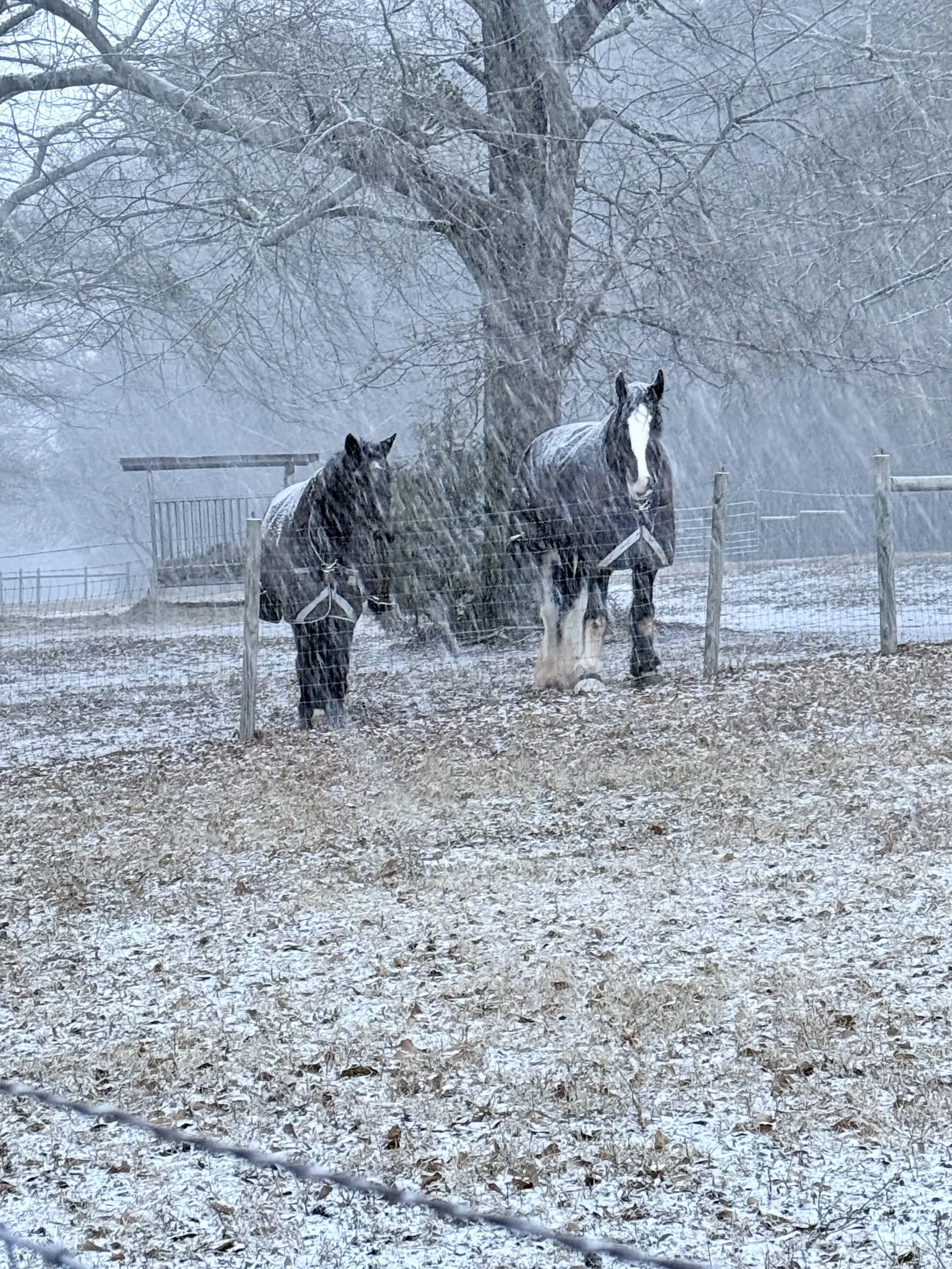
Two draft crosses blanketed in a rare southern snowstorm. Bodies built for cold still feel wet and cold differently.
Snafus: When Blankets Create Stress
Illfitting blankets create low level stress and sometimes real discomfort. Straps that loosen, twist or unhook require a horse to subtly compensate with every step. A blanket that shifts when a horse rolls or lies unevenly across the shoulders becomes something the horse has to manage all day. You might notice behavioral changes in form of reluctance to be blanketed, skittishness, general anxiety, irritability or excesss energy.
Blanketing a horse because we are cold is rarely the right reason. Horses are warmer than we are. But we can all relate to bad fit. Imagine wearing a lined rain jacket that slowly takes on water, gets heavier by the hour, shifts when you move and eventually lets cold moisture reach your skin. This feels like misery to me.
What Matters Before the Blanket
Blankets are not the first line of defense.
Before blanketing, whether horses live in or out, make sure there is continuous access to hay. A horse’s gut produces heat through fermentation. Eating is warming.
Provide shelter from wind and precipitation. Shelter does not have to be a four sided building. A run in or even good tree cover can dramatically reduce heat loss.
Avoid feeding anything unfamiliar during cold snaps. The gut does not appreciate surprises when the body is already working to stay warm. If a horse normally eats a particular feed, adding warm water can support hydration without disruption.
And check water often. Ice reforms faster than we would like, even after it has been broken.
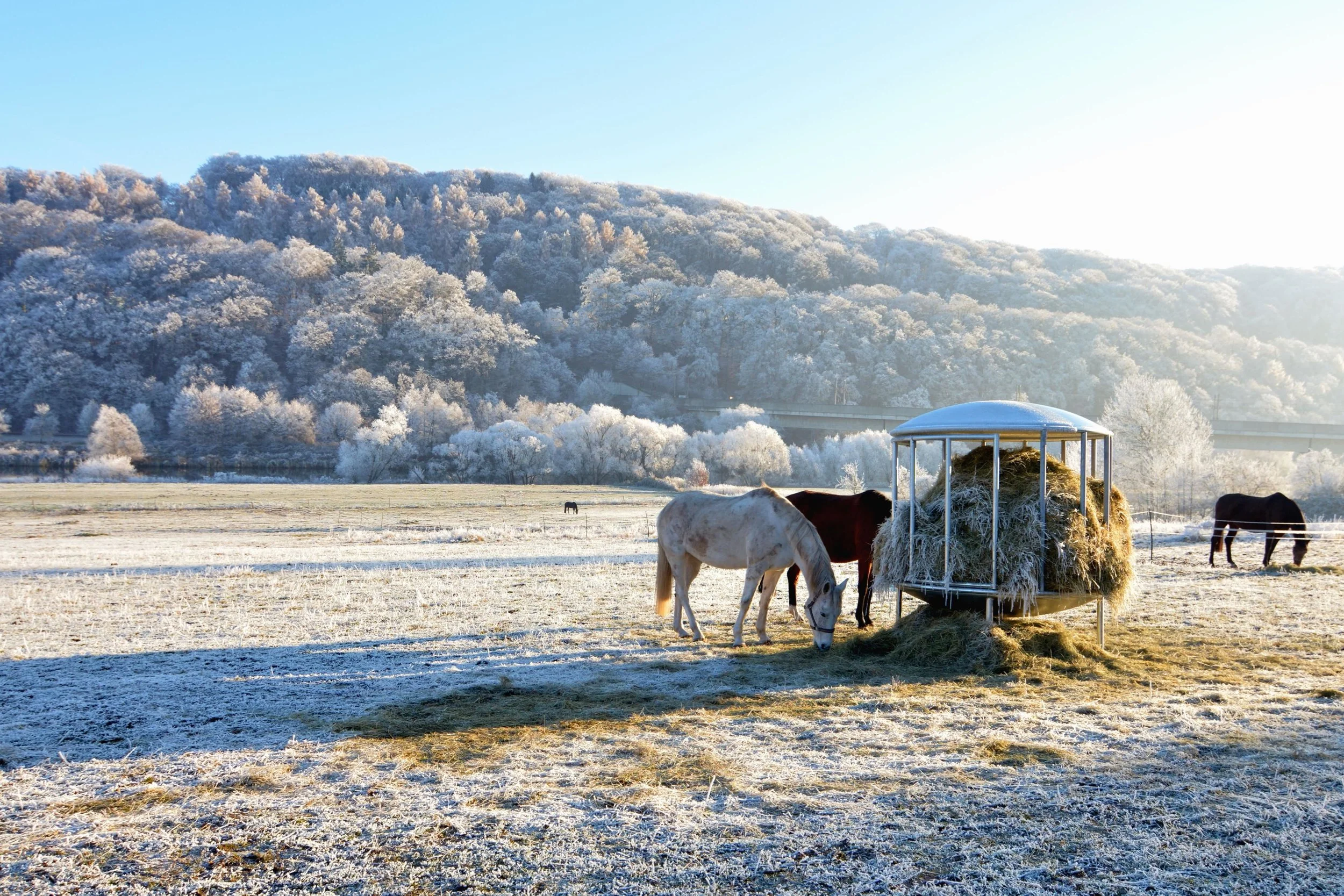
Cold weather comfort supported by continuous access to hay.
A Note on Feet
Barefoot horses often have an advantage in winter conditions because the hoof mechanism supports circulation throughout the body. A practical tip shared by one of our barn managers: applying petroleum jelly to the soles can help prevent ice balls from forming. Ice stilts are funny exactly once.
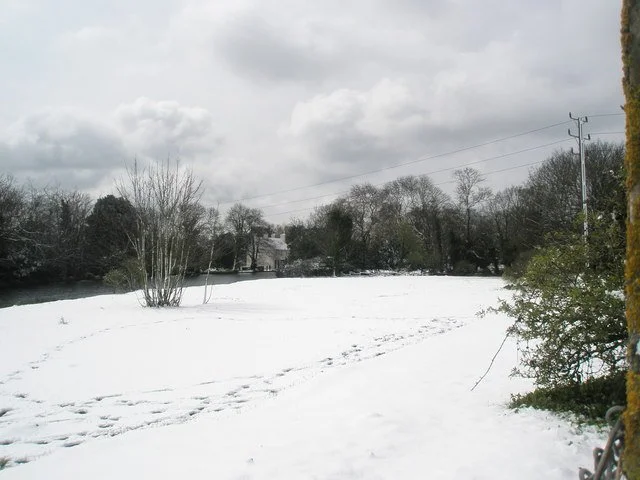
Hoofprints in the snow are delightful, but keep an eye out for ice blocks forming on soles which can restrict normal expansion and contraction resulting in diminished circulation.
What Kind of Blankets Actually Hold Up
Elizabeth again, from experience earned the hard way:
“Most waterproof blankets only last a couple of seasons before the coating breaks down and snaps fail. My go to is Horseware Ireland. They cost more up front, but they last long enough that the math works out.”
Horseware Ireland produces four lines in descending durability: Rambo, Rhino, Amigo and Mio. Rambo remains the most robust and is still made in Ireland. Depending on climate, turnout and use, the other lines can work beautifully.
Denier numbers alone are misleading. Stitching quality, seam sealing and waterproof coatings matter more than the label.
Fit matters just as much. Horseware designs blankets to stay centered and to keep straps and snaps functional over time. Their Wug cut with a higher neck suits horses that are narrower through the ribcage and generous leg cut outs allow for full range of movement.
A well fitting blanket should disappear on the horse. No shifting. No pulling. No constant adjustment.
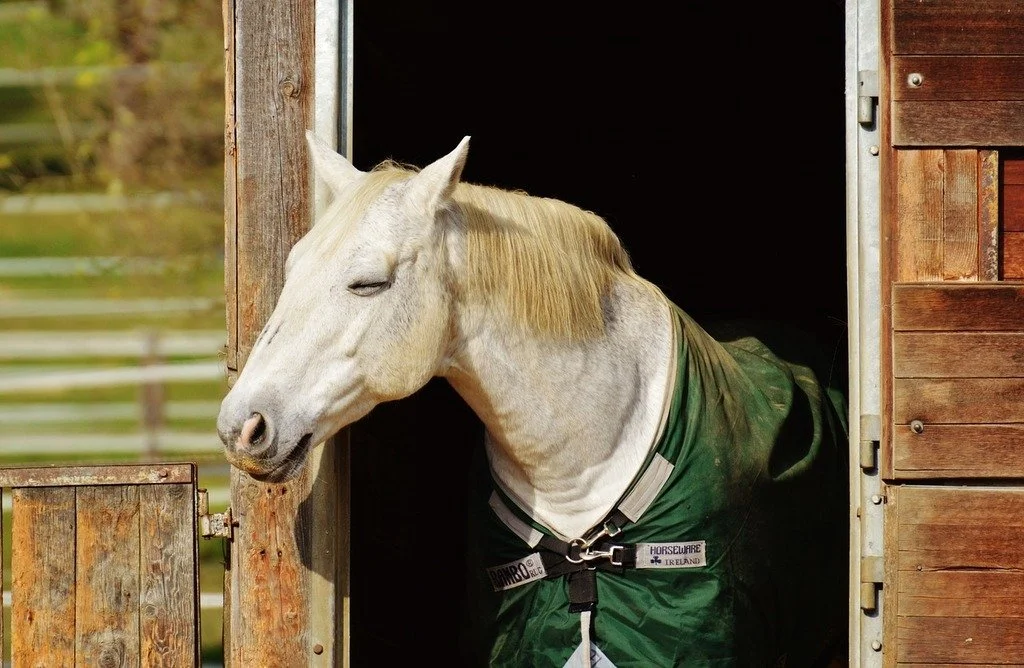
When blanketing is done right for an individual horse, the result is easy to see.
Closing Thoughts
Blanketing is rarely about getting it “right” in some universal sense. It’s about noticing what this horse does in these conditions and adjusting as the weather reminds us who’s really in charge.
Some horses run hot. Some melt in cold rain. Some will happily stand in a sleet storm like they ordered it. Others would prefer a dry layer and all you can eat hay, thank you very much.
There are good blankets, bad blankets and blankets that look great on the rack and behave badly on a moving horse.
What has worked for you where you live?
Which combinations of weather, horses and gear have earned your trust, and which ones quietly ended up retired in the corner of the tack room? Let us know.
That’s usually where the real education lives.
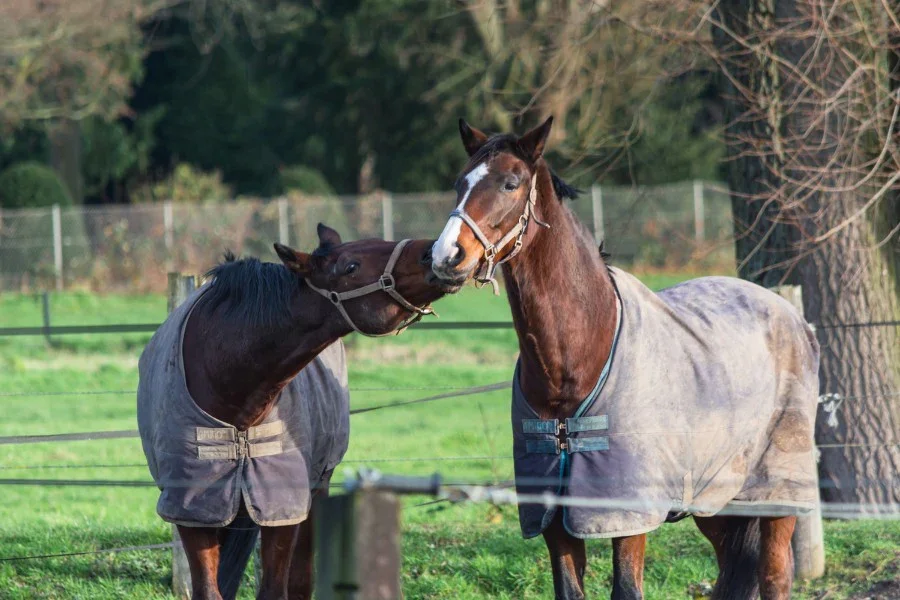
A buddy is a terrific source of warmth and movement.
Friendly Reminder: These articles are meant to spark thought, not replace expert guidance. Consult equine professionals for individual advice.
Retail Resources
Keep an eye out for sales where you can often purchase blankets at 44-50% off:
About the Authors
Désirée Braganza, EdD, EBQ, received her equine behaviorist qualifications from the Natural Animal Centre, located in South Africa. As a member of Bodhi Horse Practice, she collaborates with equine professionals worldwide on research projects specific to experiences of domesticated horses from an ethological lens. She is a horse partner, a rider and has cared for and supported numerous horses over the years. Désirée recently relocated from Northern California and is now based in Monroe, Georgia, USA. She consults internationally in person and virtually.
Elizabeth King is a USDF Bronze and Silver Medalist with a lifetime in the equestrian world. Her background includes professional dressage training, barn management and comprehensive horse care, experiences that shaped her understanding of the wide variation in horses’ physical, mental and nutritional needs.
Elizabeth is a nutrition specialist and the founder of Equine Balanced Support, a research informed equine nutrition company offering individualized support for horses in all walks of life, from performance athletes to companions. Her work emphasizes thoughtful, horse centered nutrition tailored to the individual rather than standardized programs. She is based in New York and Florida, USA and consults worldwide.
We believe in making ideas freely available, without paywalls. If this article resonates with you and you would like to offer your support so other horses may benefit, feel free to participate in a way that feels true to you.