Shedding: A Moving Landscape
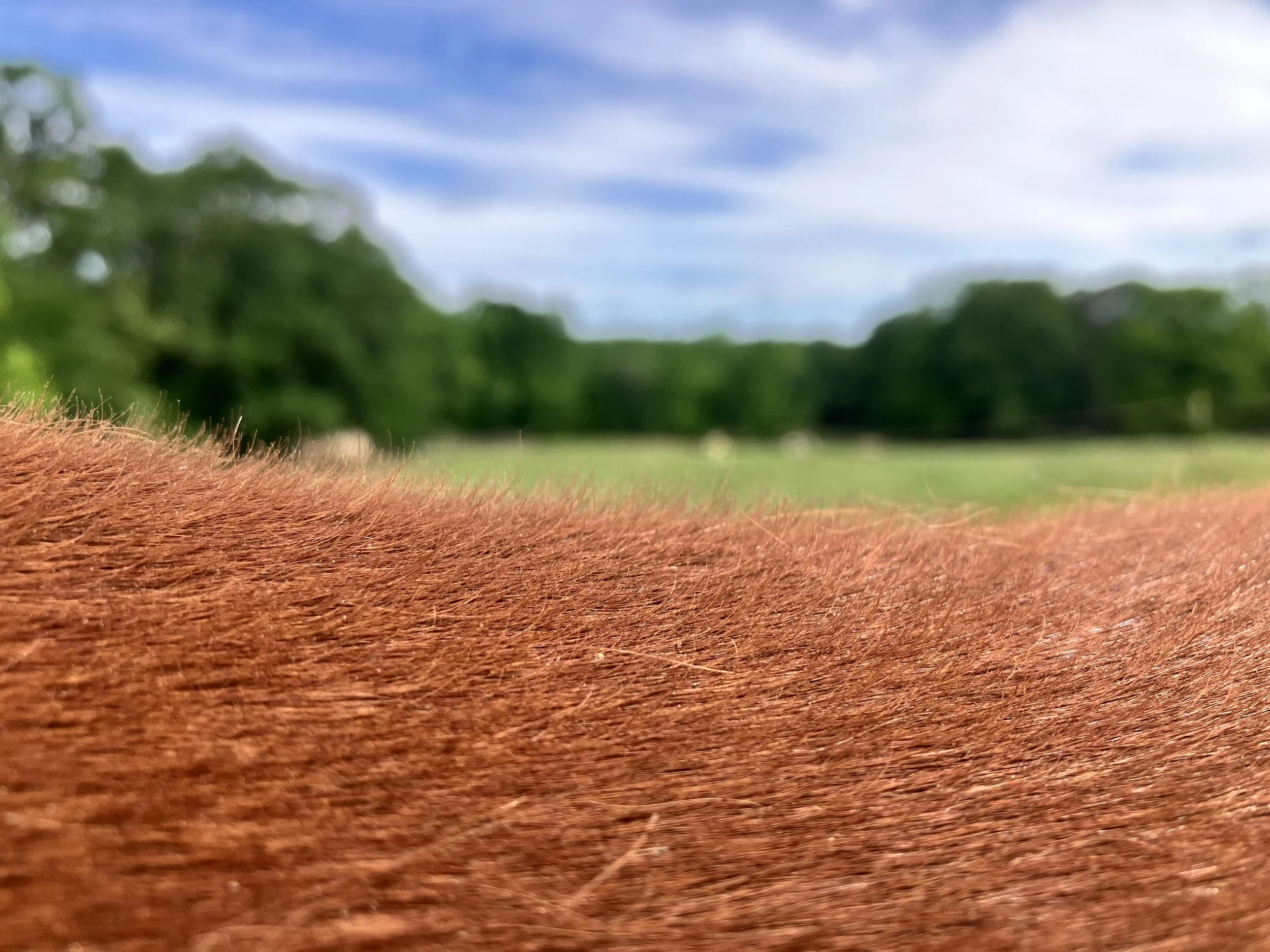
Spring shedding revels the coat as a living terrain.
Shedding: A Moving Landscape
By Désirée Braganza
It is late April in the Northern Hemisphere and spring is underway. Horses are shedding and humans are armed with grooming tools, covered in hair, participating in a seasonal ritual familiar to almost everyone who lives with them.
It can seem ordinary until it is not.
Anyone who has lived with a horse who struggled to shed, or one adjusting to a radically different climate, knows this is more than loose hair coming away under a curry. Even overzealous deshedding can sometimes interfere with a process the body is carefully managing.
In free living horses, the coat is adaptive. It responds to conditions that are always changing. A winter may be mild or severe. A spring may arrive early or stall. Coat shifts are influenced by temperature, but even more by daylight, one of the deeper biological signals shaping seasonal rhythms.
Domestic life alters some of this. Nutrition, blanketing, clipping and management all influence the kind of coat a horse grows and how they transition through seasons.
When horses shed, two things are happening at once: they are releasing what is no longer needed while also growing the summer coat as part of the cycle that will later give way to winter growth.
There is intelligence in this layering.
The coat is not a single surface. It is part of a layered protective system involving hair structure, skin, natural oils and proteins, including latherin, which supports waterproofing, cooling and aspects of self maintenance. Shedding is part of this broader reorganization.
Rain softens and loosens hair. Wind lifts it. Rolling helps release it. Trees and fence posts become grooming partners. Even mud, dust and soil can play a part. These are not incidental details: they can support the transition.
And shedding carries a metabolic cost. Growing and replacing hair asks something of the body at a cellular level. It is a substantial seasonal task. That is one reason support can matter more than intervention.
A few thoughts:
Think from nutrition first. Hair is protein. Coat quality often reflects a broader nutritional state. Protein, trace minerals and biotin can all matter.
Let the coat come away when it is ready. Brush off what is already loose, especially if a horse seems itchy, but resist forcing what is still attached.
Use fewer products. The coat has its own chemistry and its own layers of protection. Natural oils and proteins, including latherin, are part of a living layering that supports waterproofing, cooling and self maintenance. Before adding more, consider what the horse’s coat may already be providing.
Notice changes. If a horse is not shedding, or sweating differently than usual, pay attention. Those changes can be meaningful. Consult your veterinarian.
Seek informed nutritional help when needed. Resources such as Equine Balanced Support have long approached nutrition from a research grounded, practical perspective.
Sometimes the best thing we can do during shedding season is recognize it for what it is, not housekeeping, but physiology. Not a mess to manage, but a seasonal reorganization.
Look closely at a shedding coat and it can resemble a landscape in motion.
And in a way, it is.
Friendly Reminder: These articles are meant to spark thought, not replace expert guidance. Consult equine professionals for individual advice.
Curious about what your horse’s shedding process might reveal? Get in touch to explore a more informed, supportive approach to seasonal care.
About the Author
Dr. Désirée Braganza received her equine behaviorist qualifications from the Natural Animal Centre, located in South Africa. As a member of Bodhi Horse Practice, she collaborates with equine professionals worldwide on research projects specific to experiences of domesticated horses from an ethological lens. She is a horse partner, a rider, and has cared for and supported numerous horses over the years. Désirée recently relocated from Northern California and is now based in Monroe, Georgia, USA. She consults internationally in person and virtually.
We believe in making ideas freely available, without paywalls. If this article resonates with you and you would like to offer your support so other horses may benefit, feel free to participate in a way that feels true to you.